In today's coffee break, we are talking about a truly heartwarming topic. My guest is Fruzsi, a senior consultant, who besides her work, also gives us an insight into the world of animal rescue and animal shelters. We will find out how animals end up in shelters, what challenges their rescue involves, and what we can do to help more four-legged friends find a loving home.
Clarity Could you tell us a little bit about how you got involved in animal rescue?
Fruzsi We have always had pets, I grew up with them. We had dogs, cats, bunnies, hamsters, and even rats.
Currently, I also have a very smart rescued dog, Pitypang (Dandelion), and a wonderful cat, Zokni (Sock).
This is where my respect and love for animals comes from.
When my grandmother moved, there was a used chest freezer and an old gas stove left over, which we advertised as free to a good home. A volunteer from the Luca Dog Shelter Animal Welfare Foundation applied for them, and it was a no-brainer that we gave them to them.
After that, I started following their work on social media and regularly brought donations to the donation drives in Budapest.
After a while, I decided to visit the shelter in person (this was seven years ago), and I have been helping their work as a volunteer ever since.

Clarity What exactly does an animal rescuer or a shelter do on a daily basis?
Fruzsi The shelter is primarily responsible for stray dogs found in the Csévharaszt area, and within its capacity, provides them with accommodation and veterinary care. In addition, the shelter also accepts dogs from other places in need: sometimes animals are transferred from shelters in Eastern Hungary, and dogs have also arrived here from the closed dog pound in Gyömrő.
There are many ways of admission: sometimes the shelter staff or volunteers have to go to the site and rescue the animal, other times the finders bring the dog in need of help to the shelter.
Every year, several dogs that have suffered accidents or are in a severely weakened state enter the shelter, requiring immediate veterinary care. These cases often require urgent veterinary intervention and significant financial expenditure.
Running a shelter is an extremely multifaceted and time-consuming task. Organizing the basic operation of the shelter and performing most tasks falls on the president of the shelter, Veronika Áfra. Her brother and partner help with daily tasks, such as feeding, arranging the kennels, and cleaning.
Running the shelter also involves many other tasks. These include administering medication to animals, wound care, post-operative care, as well as carrying out various logistical and administrative tasks. The health status of the dogs living in the shelter must be continuously monitored, as well as whether there is capacity to take in a new dog and which kennel it will fit into.
Healthcare for animals is of paramount importance. It must be ensured that vaccinations are up-to-date, every newly arriving dog undergoes neutering and a general veterinary examination, and receives a microchip, vaccination, and parasite protection. The microchips must be registered, and vaccination booklets and veterinary logs must be kept continuously up to date.
Appointments must be coordinated for neutering and other veterinary examinations, then the dogs must be taken to the clinic or for surgery, and in many cases, someone has to be there with them during the examinations. These tasks are extremely time-consuming.
Meanwhile, inquiries are constantly coming in: phone calls asking for help, and messages from people interested in adoption, which must also be answered.
The shelter has an open day every Saturday. At this time, one of the most important tasks of the shelter manager is to talk to those interested in adoption, learn about the prospective owners, assess the seriousness of their intentions, and manage the adoptions.
The social media platforms are managed by a super creative volunteer, who also helps with answering letters along with another volunteer. Writing grant applications and the monthly physical donation drive are also carried out by volunteers.
During the Saturday open days, other volunteers also play an important role. Thanks to them, the nearly 120 dogs can go for a walk every week, which is important not only for exercise but also for socialization. With the help of volunteers, even the shyer dogs gradually open up to the outside world and to people.
Clarity What kind of stories do you encounter most often? How do the animals come to you?
Fruzsi A lot of dogs end up here because of moving, or the owner died, or they chose a dog of an age or size that did not match their temperament and life situation, and in many cases, unwanted home breeding also ends up in the shelter.
Clarity Is there a story about a rescued dog that has particularly stuck with you?
Fruzsi I couldn't single out just one, it is always a great joy for me when someone gives a chance to an older, disabled, or behaviorally challenged dog. What is also a super experience to see is when a terrified dog starts to trust people again, thanks to the volunteers, and opens up.
Clarity What is the biggest challenge in animal rescue?
Fruzsi I think the biggest challenge for every shelter is the lack of financial and human resources, as well as capacity.
In Hungary, according to 2025 estimates, there are 300,000 to 500,000 stray dogs and about 3 million stray cats. In the 400 active shelters surveyed, about 35,000 animals live, and they operate at full capacity constantly. These are shocking numbers, and unfortunately, a significant portion of stray animals are also unneutered.
For general veterinary costs, certain clinics work for 10-20% less compared to private individuals, but interventions requiring specialist care are performed by specialists at 100% price, almost without exception (e.g., orthopedic surgery, ophthalmic intervention).
The number of spaces is limited, expansion is expensive, and it is also very difficult to find labor for the shelter, as they cannot provide such high salaries to employees here.
Shelters maintain themselves from the 1% tax designations and donations, without state assistance. There are opportunities for grants, we also apply, and that support covers a few percent of the shelter's operating costs.
Clarity How can someone help if they want to support the work of shelters, but for example, cannot adopt?
Fruzsi There is an opportunity to walk dogs, clean, and do DIY work at the shelter on Saturdays.
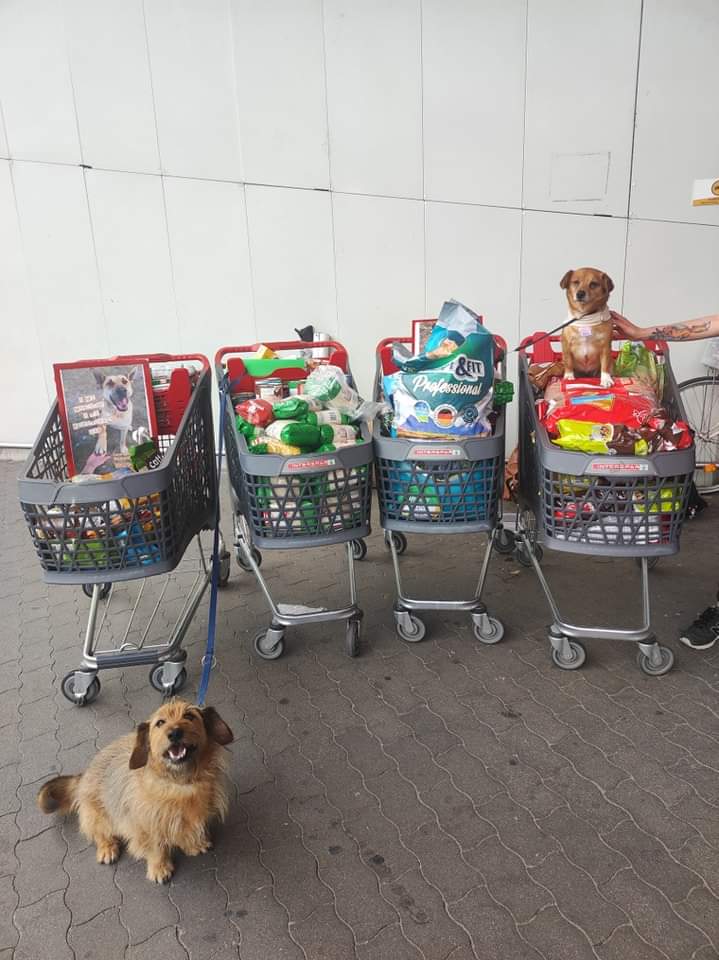
Once a month there is a donation drive, which can be followed on the Facebook page of the Luca Dog Shelter Animal Welfare Foundation to see when and where it is.
You can support the shelter with your 1% tax designation, as well as by bank transfer; all related information can be found on the website and the Facebook page.
Clarity What would you advise someone who is thinking about adoption?
Fruzsi The most important thing is for everyone to choose a dog that suits their own temperament and life situation. It is also important to keep in mind that dog ownership is a commitment for 10+ years, which involves many challenges and sometimes sacrifices. The dog is a companion animal that requires a lot of engagement, not a watchdog, garden or room ornament, or a status symbol; it is a huge responsibility to care for them and keep them properly.
Before adopting, it is worth looking into how to introduce the dog to the family (for example, based on the 3–3–3 rule), and what to pay attention to in terms of nutrition, exercise, and general health care. This includes vaccinations, protection against parasites, and the prevention of heartworm, which is particularly important to pay attention to.
Responsible dog ownership includes quality nutrition, mental stimulation, and even dog school. These are all time- and money-consuming things, so it is important for the adopter to prepare for them in advance.
Developing the right dog-owner relationship is a longer process, especially in the case of a dog with a more problematic past. However, the invested time and patience will definitely bear fruit.
It is also worth considering that dogs' behavior changes continuously until about 2–3 years of age, and certain age phases can present challenges for owners. Because of this, I wouldn't discourage anyone from adopting a dog that is 2-3 years old or older, as they can also become wonderful family members, and indeed, life is much easier with them than with their younger counterparts. Dogs can be trained at almost any age, and with the right owner, they can integrate well into the family and are fast learners even at an older age.
Clarity What do animals teach us – even those who come from a difficult background?
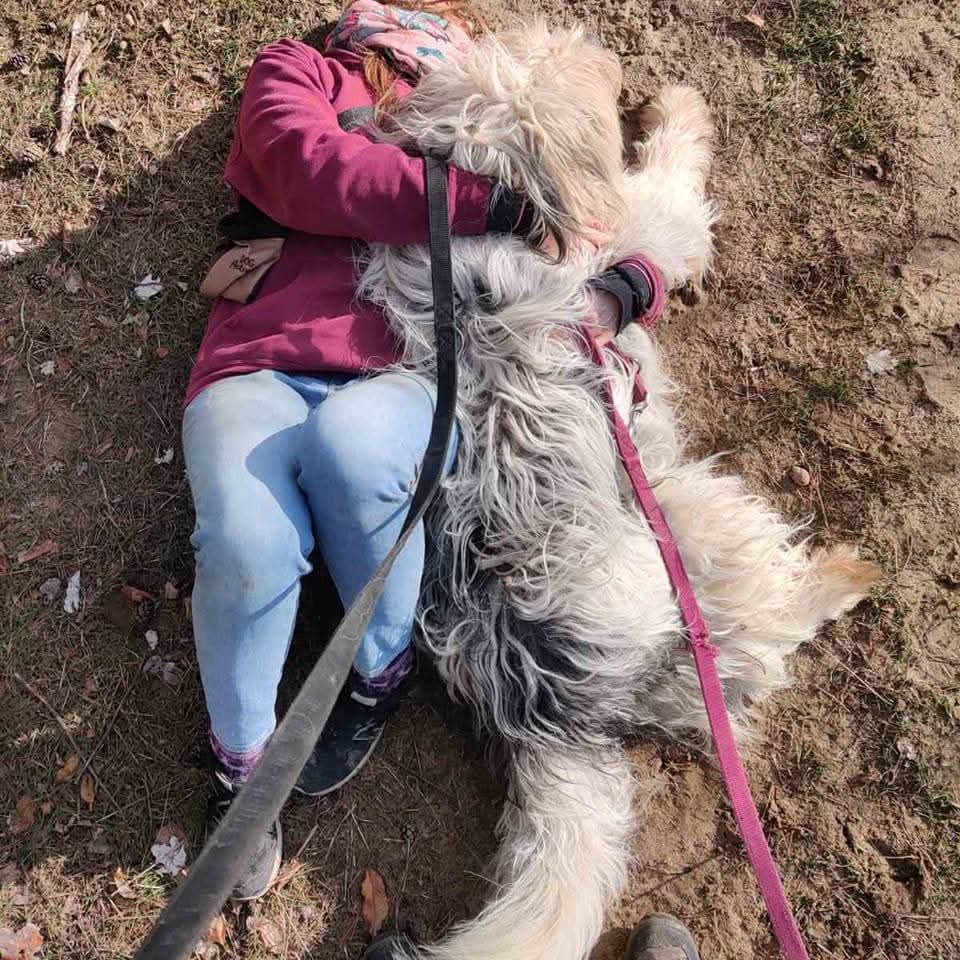
Fruzsi Many of them come from difficult backgrounds, yet despite the many negative experiences, they are able to trust people again.
They are wonderful creatures, so it is particularly sad to see the consequences of irresponsible animal keeping and the situation of struggling stray animals.
Clarity If you could send one message to everyone about animal welfare and dog ownership, what would it be?
Fruzsi Perhaps a bit biased (as a shelter volunteer and owner of a rescued dog), I would say: don't buy, adopt instead, because there are real treasures in shelters.
You can find incredibly intelligent, cool, beautiful, obedient dogs with good nervous systems who are easy to accustom to the family here as well.
And if someone cannot adopt, they can still help a lot just by visiting a shelter and spending a little time with the dogs, or perhaps financially supporting the organization of their choice.

Thank you very much to Fruzsi for sharing her experiences and stories from the world of animal rescue with us. We hope that this conversation has not only brought the daily life of shelters closer to us, but has also given us inspiration to do something for animals ourselves – whether through adoption, volunteer work, or support.